James: Most investors fail because they quit too early.
James: Most business problems come down to lack of transparent communication. As a leader, it is your responsibility to not just make sure you're communicating effectively, but also that your organization is communicating effectively within. You have to make assumptions. You have to make assumptions about the future and what's going to happen in the market. A lot of times I don't think those assumptions are really pressure tested.
James: I think every good entrepreneur should have a scorecard, and I audited our scorecard and I said, how many deals did we close on where it was our first offer? And the answer was zero. So that tells you follow-through is pretty important. Deals can definitely be had, but it's not usually going to be your first attempt at trying to get it. If we aren't using our businesses as mechanisms to help other people in the pursuit of what they want in life, what's it for?
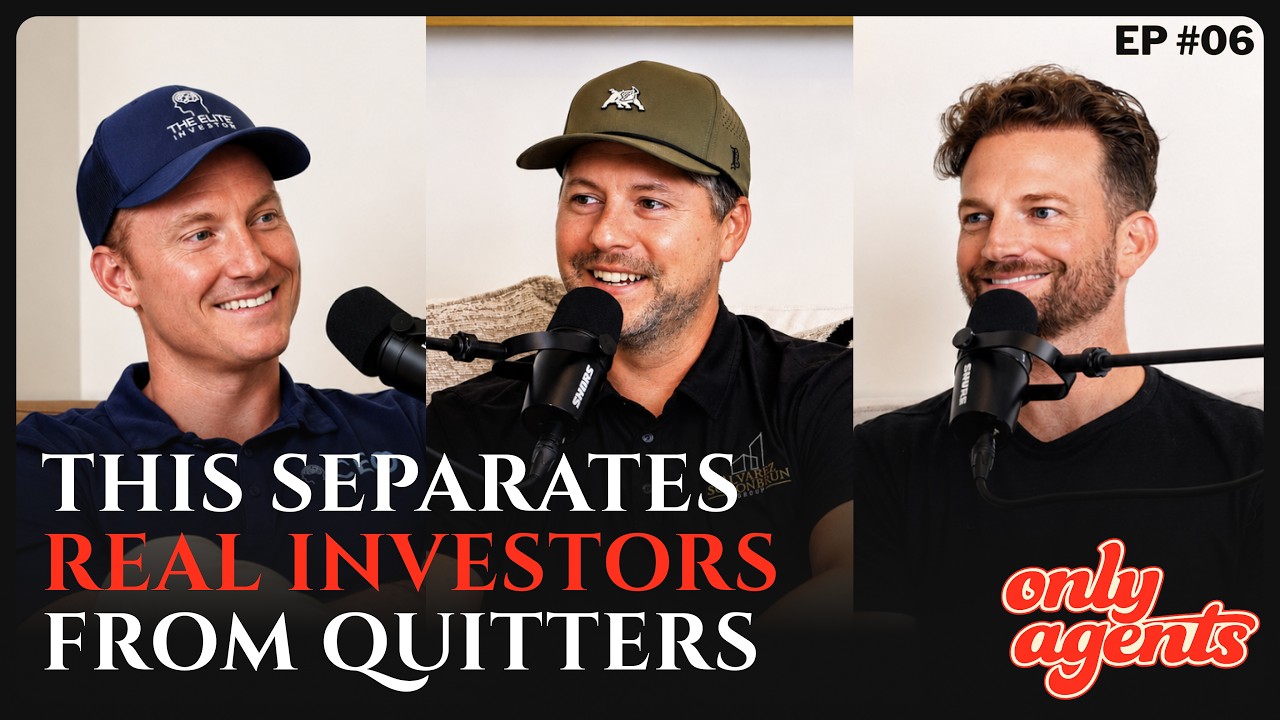
size: 16px; font-style: normal; font-variant-ligatures: normal; font-variant-caps: normal; font-weight: 400; letter-spacing: normal; orphans: 2; text-indent: 0px; text-transform: none; widows: 2; word-spacing: 0px; -webkit-text-stroke-width: 0px; white-space: normal; background-color: rgb(255, 255, 255); text-decoration-thickness: initial; text-decoration-style: initial; text-decoration-color: initial;">Stefan: Welcome back to another episode of ASG's Only Agents podcast, where we have fake sponsors, real guests, and real conversations. I am Stefan Alvarez, and as always, I'm joined by the S to the A in ASG, Alan Schonbrunn of Alvarez Schonbrun Group. And today's guest is someone who's really become one of the most connected and respected individuals in the real estate game in Tampa Bay right now. He is a former Navy SEAL turned serial real estate entrepreneur, investor, developer. He's an agent and team lead actually at our brokerage. And he's also created a mastermind group in the Tampa Bay community for real estate investors.
But what makes our guest really interesting, I think, is the discipline behind all that, the leadership behind everything that he does. And really, his transition from military into entrepreneurship. So today, welcome James Lascarra to the podcast. Thank you guys for having me on. I'm honored to be here.
James is also someone that I've spent more time with shirtless than fully clothed. I met James in 2020, you know, Can you explain that for me? That was going to be from my intro, but I wanted Alan to jump into that. James and I met, I think it was like 2021.
I had just moved back from New York, and we met in Asana. And we were doing a contrast therapy class at Kodawari. So Kodawari can be our fake sponsor because it brought it brought us all together. But yeah, I met James. I think at the time I wasn't even in real estate yet. I was just still a full-time day trader. And people kept talking about James and his social media savviness and his, I think at the time you were in 2021, you weren't, you didn't have all the facets of the business that you have now.
And so you were, I think just beginning to start your mastermind groups and your mentorship kind of arm of your business. Yeah, that was the year we first started our local event. We actually paused it for a bit and we started it back up. Like I think it was end of 2022. And for a year we did it monthly, which was a big drag. Now we do it quarterly. The big event we do quarterly monthly is just really often. Yeah, it was about that time. And the first time I went to one of your monthly meetups, I don't even think I had my license yet.
So, but I went with a bunch of the Kodawari people. I remember like seeing Mark there and seeing a couple of other OG Kodawari people.
One of my favorite memories is because I went to Kodawari with you and we did contrast therapy session. I don't know if you remember this, but we did it a couple of times together. But when you're in the sauna, you do have to go around the circle and you know, talk about something personal, ask a question. I remember this was before we kind of got to know each other at the brokers together. But the questions each session from you and the sauna were so deliberate and so intense. I don't remember. Oh yeah. And I was like, I love this guy.
Everything is intentional even when we're sweating. You could tell James is disciplined when he was like in a cold plunge or even in the sauna. He was always, you were always like laser focused. Yeah, I appreciate it.
Were you like that as a child? I feel like I got that way in high school. I don't know. I think there's a component of trauma that makes people very, very resilient. But there wasn't like anything particularly crazy that happened to me. I think it just, I went to a private school growing up. I went to like Charlotte Catholic was named in school.
Because you grew up in Charlotte. In Charlotte, North Carolina. And I remember I was swimming and just really focused on my grades. I remember there were a lot of people that would just like go out on the weekends and party. And I was like, I don't understand how that will bring me further towards my goals. So I got just really focused on doing well academically and swimming. I was actually really into triathlons back in high school too. So you're hanging out with triathletes are like 30 years old. So I think that kind of influenced me and helped me help things click early on.
Just like swimming is one of those sports too where it's it's not necessarily team sport, I guess, unless you're doing like relays or something like that. So it's like you challenging yourself individually. You're doing the training for yourself and the individual races. And with that comes a lot of like individual discipline and and focus and consistency. Which if you don't do well, you have nobody but to blame by yourself. Right. Yeah. Right.
Was there any real estate investing in your family? Or did you have your parents, uncles, aunts? I mean, was there any exposure? No, it's it's kind of funny. Actually, my parents only ever really bought their primary house. Like they moved throughout life. But I remember when I was really thinking about taking my foot and put it on the gas pedal with real estate around 2019, I had been investing a little bit since 2014. But I remember my dad having hesitancy and he's been like a lifetime S&P 500 kind of guy, which is fine, you know.
That's that generation was you buy a house, you live there for 40 years. Yeah. You have your financial analysts just invest for you and you retire at 65 and then you don't do anything after that. Yeah. So he expressed concerns and he was like, you know, there's some real risks. And I remember thinking, I'll respect my dad's probably going to watch this, but I'll respect him. I was like, I can't really take advice from him on this one thing because he never did it. So I think it's important to take advice from people who have accomplished the actual result or not and have the story to tell, but he never really did much real estate investing.
So it's like, don't, you know, Are they business owners or entrepreneurial at all? Or were you around that as a child?
My dad had his own management consulting business, but he's, he's not quite, I would say like the modern day entrepreneur. I wouldn't say he like, he wasn't really working on weekends and stuff. You know, I feel like a lot of entrepreneurs now they kind of, it's kind of hustle and grind culture more. I just always wonder where it starts or if like you can see, because like obviously we have two boys, my wife and I, and I look at my oldest and I feel like he already just with his personality type at 10 years old, I can see like that entrepreneurial spirit in him.
And so I always wonder, you know, someone like you who is, like we talked about has become a serial entrepreneur. If like as a child, you're wanting to start like a lawn business or eliminate stand. I did. I did. I think it's a personality type thing. I don't know what the combination of things or factors that cause it, but my mom told me the story. I don't remember it. I was in like second grade and we were at the beginning of the school year and we went out and bought school supplies and I was like, I need the big pack of erasers.
Can I get like the jumbo pack of 30 erasers or whatever? And later she learned I took them all and sold them for a quarter at school to like my friends, like, oh, you need a racer. I have a racer so I can make money. So I think I probably viewed it at the time of like doing something in order to make a solution happen. Because my parents were pretty strict on me like, like we never got to order school lunch. Like we went to school with our lunch that they made. So like we didn't really, they wouldn't give us money to like have chocolate milk even at lunch.
It's like, well, if I do this thing with the erasers, like I have my quarter to get my chocolate milk. So like, I'm just going to make that happen and hey, then I solved my problem. That's great. That's James's why. Chocolate milk. There you go. You mentioned house hacking. So what was the first time you even heard about like there was something called house hacking? I know in 2014 was the first time you did it and it was in Charlotte, but how did you even get to know what that was?
Yeah, I was doing house hacking before I knew what it was called. I think somebody invented the term long ago way before I started doing it. I just didn't know that's what it was called. So I bought my house in 2014 and immediately went on deployment. And so I got back and there was a note on my door from a neighbor. I didn't really even know my neighbors this point. I left like three days after buying my house. And so there was a note on my door and said, Hey, we had a family friend. She has a an apartment and it flooded and she's looking for a place to stay for like six months while this all gets remediated.
And I wanted a two car garage when I bought a house because I like a workshop and doing stuff. And so most two car garages. I was in Virginia Beach at the time. Okay. Most two car garages are going to be like bigger houses there. So it was a five bed, two and a half bath house. I was like, I don't really want someone in my business and like, you know, I, but I have the room. So what do I have to lose? So like, you know what, I kind of don't want to do it, but let me meet with her and see how she is.
Dude is like this 65 year old woman. She was, she worked part-time, semi-retired. She was like the nicest lady. I was like, let's just see how this goes. Dude is awesome. She would mow, she asked to mow the yard. She was like, can I get your lawn mower? I see the grass. She was taking better care of the house than you probably would have at that time. Yeah, it was awesome. And so that went on for, you know, six months or so. Her house got renovated and she moved back out. I was like, why don't I just keep doing this?
I'm just paying for half my mortgage. And so then I found a roommate and, uh, and then that roommate lived with me the rest of the time I was in Virginia Beach. And, and it was cool because she had a dog. So I was like, I get the benefits of a dog that's pretty well behaved, but I don't have a responsibility to the dog or like the liability for it. So it was nice. Yeah. So just do you still own the house or did you wait a couple of years and then, you know, did you start bouncing around?
Yes.
So I owned that house when I moved to Tampa in 2019. I kept that house, turned it into rental. And then I held on to it for additional few years and then the capital gains tax exemption on it. So I sold it. Yeah. Yeah. So it's, so the real estate investing kind of started. It sounds like while you were still in the military. Yeah. Yeah. I, I went to the Naval Academy and I graduated from there in 2010. And then I was in the military for 15 years. So I was fully out of military in 2025.
So last year. Oh, wow. Yeah. There's a lot of, okay.
What made you in 2019, you know, you talk about like ahead of your time. It's like, obviously didn't know COVID was going to happen, but you moved to Tampa in 2019, right? Yeah. And which was a great time to doing it. And then you started buying up rentals in 2020, which was a fantastic time. Yeah. To be doing that. Like, was there a reason why you picked Tampa? Was there a reason why you're like, I'm going to do value add rentals? What was the reason for all those? Yeah.
So I had some, I had done some other passive real estate investments. Like my buddy was doing BRRRR multi-family. So I invested passively a few times. Maybe explain Burr. Yeah. Yeah. Buy, rehab, rent, refinance, repeat. And so he was buying these four to eight unit or maybe five to eight unit apartment complexes, small multi-family, I think in Baltimore. I mean, he, he executed all the strategy. I'd just loan him like 50K, 100K for 12 to 24 months of time. And then you'd pay back with interest. So I was basically just private lending on his deals.
I was like, oh, real estate seems like it could be like a viable thing. So I was doing a little bit of that in those years that I was also house hacking. So the decision for me to move to Tampa though, I was on deployment in 2019. And this was probably like April, May kind of timeframe. So it's actually about seven years ago from where we are right now. It's crazy. And so there's a thing in the military called detailing, which is kind of like identifying the plan of where you're going next. And there's usually a pathway of different jobs or billets, like roles that you can perform within your, your job description.
And so I was kind of reflecting while I was on deployment. I was like, I've been on seven deploy, sorry, I've been on four deployments in seven years while I've lived in Virginia Beach. I've been gone from home like 70 or 80% of the time. Like I would be, I'd be cool doing another deployment, but also be cool going into a non-deployable role and like seeing how that is and maybe getting some stability in life. Because as a SEAL, even if you're not on deployment, you're still traveling to train with your platoon like constantly. It's a lot.
It's a lot. It definitely, it can wear on you. And so I was asking around about the different billets. There was like Miami, there was San Diego, which I'd already lived in. And so I knew what that was like staying Virginia Beach, which I really hated. I didn't like Virginia Beach at all. And then there was Tampa. And what I noticed is, well, I had already experienced two of them and then Miami was an option. And people had some negative things to say about Miami. I don't see you in Miami. Yeah, nobody had, no, but the crazy thing was nobody ever had anything bad to say about Tampa.
I guess it seemed thriving in Miami to be honest with you. What's that? I could also see you thriving in Miami to be honest with you. People would have know what hit them whether you're going into a meeting over there. I don't know, but everyone had good things to say about Tampa. So I was like, let's see what that's like. So pulled the trigger on it. There were a few other overseas options, but I was like, I just don't want to do it.
How many people did you know in Tampa when you moved? Maybe two. How'd you pick where you moved to in Tampa originally? Because obviously Tampa is a big city. It's a small town, but it's become a big city. So how did you narrow down, I guess, the area or neighborhood that you knew you wanted to be in? Yeah.
So I had a list of houses that I wanted to go look at and I almost bought a house up North of Kennedy. I was like, this goes to putting in an offer. And the agent I was working with at the time was like, hey, there's one. I let's see this other one tomorrow. I think you might like it. It's a new build. You might like this area too. It's also close to base. And I know you'll be working on base. So let's check that out. I'm glad he made that recommendation because that's the house I ended up buying.
I was pretty strategic with it. I was like, okay, I know I'm going to house hack here. I know I need at least four bedrooms and a good bedroom to bathroom ratio. So at least like three bathrooms, I know I need good parking so nobody's ever blocked in. Because I'm going to have, instead of one roommate, I'm going to try to have two here and just have my whole mortgage covered. Like I, and I was doing a ton of woodworking at the time. It's kind of like a side thing that I did a while back.
And so I knew I wanted a two car garage. And so based on looking at everything, I think I realized that like a new build made the most sense. And so I picked a place south of Gandy. Like Dallas Point. Dallas Point area. It was on Dallas Point road actually. I mean, that's a great time to buy in Dallas Point. Yeah. Yeah. I bought my house for $5.22. It appraised for $5.65. And I sold it about three years later for $8.75, I think. I mean, yeah. Can't get any better than that. Yeah. That's a great, that's a great deal.
Well, you mentioned detailing from the military earlier. Yeah. So I am curious for anyone that leaves the military and goes into civilian life and then goes into business, I would imagine there are some lessons or a lot of lessons and things that you take from your time in the military to what you do in both your personal life, but also in business. Yeah, for sure. Is there anything specific that you notice or realize like, oh, this is something from my time or my training or my leadership during my military time?
Most business problems come down to lack of transparent communication. And so I think as a leader, it is your responsibility to not just make sure you're communicating effectively, but also that your organization is communicating effectively within. So I think that's a big one. From there stems all these other things like, hey, what are the priorities today? Where are some of the contingencies we need to work through if things don't go a certain way? So I think just communicating effectively and not shying away from the uncomfortability of like when you have to give someone news, maybe they don't want to hear.
It is just as uncomfortable for me as it is for anyone else. But you can't leave someone guessing what you're thinking if a change needs to be made or something needs to happen urgently. Like it's just not fair to you or them. So I would say communicating is a big one.
When you moved in 2019, you said you were using an agent. You probably didn't have your license at the time. Correct. I got my license at the end of 2021. Okay. What was the reason why you got your license? Maybe tell everyone listening what your journey in real estate, obviously they've heard that you started house hacking in 2014, investing, but what, you know, on the sales side, on the mentorship side, what kind of was your journey with real estate?
It is a lot of stuff. So moved here in 2019, bought my first house in Tampa at that point. I had two houses, one of Virginia Beach rental, the house I was living in, which I was house hacking. COVID happened 2020. I had all this money I'd kind of invested and saved up while I was on deployment. I live really frugally. Like I'm a pretty simple guy. It doesn't take much for me. And so I had all this money I'd saved up and I noticed that interest rates had dropped and real estate in Tampa had really peaked my interest because it was actually because my rental of Virginia Beach had gone really poorly.
Like I hired the first property manager, I threw a rock at and had a bad experience. I'm like, what did you expect to happen if you didn't really do your diligence to make sure they were good? So I was like, the reason you got a bad experience with that is because you were poorly prepared. So prepare yourself. And so the more I started learning about it and doing the math on rentals right at the same time, it was just kind of a perfect storm of when the rates started coming down. I was like buying rentals doesn't seem really that complex.
And so I bought a rental as a Section 8 rental in Sulphur Springs. That was in, I think, April of 2020. Which is, you know, April of 2020 is prime. I mean, that is COVID at its peak, at least fear-wise. Yeah. So I did that and I was like, I could do that again. And so I did it again.
And again, so I bought seven rentals in nine months. Oh, wow. So I was just like, were they all Section 8? No, the first two were Section 8. So key thing, the second one of those Section 8 rentals, I bought it from Greg. Okay.
Greg owned the property. So for the audience and listeners, Greg is our broker and a friend of ours. Yeah. And so at the time, they had mentioned, they're like, how did you kind of like know to negotiate this way? And you mentioned you didn't really want to use an agent. You just wanted to use the listing agent, which was us. Like, if you thought about getting your license, I was like, I don't want to deal with all that right now. And so that kind of, that was a bookmark in my head that I came back later to.
The reason I ended up getting my licenses, frankly, I wasn't super impressed with the agents that were kind of in the marketplace. The people I was working with on the buyer side were fine. But I was like, I want, I want more control. Like if I want to get up early in the morning, like get my day ready with offers and stuff, I just, I can't expect somebody to be available at my back and call. So I decided to get my license in 2021. I had this portfolio rentals at the time. And I remember thinking, I was like, it would be nice to have a place of, of all these lessons I've kind of learned through my own struggles or my own stepping on my own foot kind of thing.
So like, why don't I offer that to other people where I can share some of these lessons?
And that's kind of how the Elite Investor was born.
And was the first one in your house? It was in a room just like this. Like we're sitting here right now. How many people were there? Like four total. I think it was me and three others. And I remember I started going to a church in South Tampa and there were two different people who had asked me a similar question about what I was doing with real estate. I was like, instead of me having to explain this twice, like why don't you just come over and I'll explain it at the same time. So then you can understand.
So that's kind of how it was born.
So you go from a room like this with four people to how many, how many members now in the mastermind community? I think it's about 135 in the mastermind community and at our quarterly events. We've gotten to the point where we've surpassed 400 registrations. Now we have like a paid ticket price. So that's, that's in the 250s or so now. So yeah, those quarterly events are great. I mean, I remember going to some of the early ones when I first found out about them and you started doing them and then to see, at least from my perspective, very quickly over like two years, I feel like it like jumped in growth.
Yeah, I appreciate it. Yeah, but I mean, there's so much value that you bring to those events, the guests that you put in the room. And then just the networking is obviously, I mean, it's fantastic. Thank you.
Yeah, I would say since the beginning, it's really been a passion project for me. So I find that really fulfilling, right? I remember talking with another entrepreneur and he was like, wow, this is like a great business model for you or, you know, you can really like charge a certain amount. I was like, I don't think you'd understand, I don't think you understand like how much I enjoy it. I do it for free, right?
So, and then on the development side, how I got into that, I remember doing the math. I was like, I moved into this new construction house and I can see what they paid for the land. And I know what they would charge me to build it for me and their profits baked into that. And there's still a wedge of margin in there. And so I bought a new construction house, lived in it, did the house hacking thing. And then I bought another new construction house and did the math again. I was like, there's something here.
You don't have to be super into construction. You don't have to be a general contractor. You don't have to have built 100 houses to get into real estate development. You just need to know how that math works. Two plus two can equal nine and the bigger the end result, like that is your margin. And so I was like, well, let's test it. So I had a rental that I bought down in Palmacia West. And I just had gotten a really good deal. And I think I bought for like 372. It's a great land business. Yeah.
I had some deferred maintenance on it. I remember doing the math. I was like, I could sell it for land by you for around 550 and maybe make around 200 or so. Or I could build this one model on it and make like 350. So like, why wouldn't I just take the extra steps to build it? So it was kind of the project we used to prove the thesis.
That was like your proof of concept, right? Exactly. Yeah. So we did that and it worked and we sold it. And I was like, okay, let's do the thing. Let's rinse and repeat. Yeah.
So James, if there's people out there that started like a development company maybe like six months ago, what advice would you have for maybe someone getting into the development world? Like what mistakes have you made? What deals have you done that you've lost money on maybe that you now have like a lot more insight on, you know, how someone who's just starting should look at it? Yeah.
I'll give you a few things here. One, understand the key steps that you really can't afford to miss. So some things are what can you actually build there is a really important one you don't really want to mess up on. Two is utilities. I think a lot of people are like, oh, it's in the city so it's got to have utilities. But what if the main for wastewater or water supply like ends right before your lot starts and now you have to extend the main? That's going to be really expensive. Or if you get like a double or a triple lot and then you do a lot split and you've got to connect utilities to the two new lots that you create a split by the.
Yeah. 95%. That seems very specific, Stefan. It will know, but it's so usually it's pretty easy. You'll still have to pay the tie-in fee if there's a main which is unavoidable. Like you're going to have to do that no matter what. But if you have to extend a main, I mean we're talking potentially six figure impact versus tie-in for water. We paid one last week it was 6,500. So you're talking a magnitude of difference there. Yeah. And then the third thing is just soft costs. B, that's a perfect segue into soft costs. Like your water tie-in, your wastewater, your architectural plans, the time it takes you for permit, the permit fees, all that stuff.
If you're going to pay a designer, if you're going to do tree work, it all starts out. I think so many people underestimate the soft cost when it comes to development. The last thing I would share is just especially in the market right now, be really careful with leverage. I think healthy leverage is really good. It mortifies me. When I see people who are, or you mentioned specifically early on in their development experience, they buy a teardown and they buy it probably about at the max price you conceivably can and they get leverage on it.
And they don't have like a super well thought out plan about what they're going to do in terms of strategy. You're going to split the lot. You're going to rezone. You're going to immediately build and they just waste time and every amount of time they waste, you're just paying the monthly bill and it eats into your margin. So just leverage can be good. It can also work against you. All it does is amplify the results. When you say leverage too, just to clarify for the audience, are you saying you're like debt service? Yeah, okay. Yeah, getting debt.
Yep. Yeah. So just be really careful with that. That's the advice I would give.
What neighborhoods are you most interested in right now in picking up land? He doesn't say do you still like new development in Tampa in the current market? Yeah. I like North Hyde Park a lot. I like North Bonaire a lot. And that's kind of like that midtown west of Dale-Mabry. I like West Four Palms still. Yeah, North Bonaire. I mean, which is like it's going to. There's a lot of parks and districts still, right? Well, North Hyde Park, yeah, but also North Bonaire. But even that section north of Columbus, I think, if the raise stadium development and mixed use plan goes through, that could definitely Carver City and those surrounding neighborhoods.
Yeah. Could see a lot of probably value increase, I think. And then West Tampa. I'm like a big West Tampa bull right now.
Are you more focused on single family residences or multi-family in terms of your builds? I love the land development aspect. So if I can go through a process and get something ready and then partner with somebody to actually build it and then kind of be like out my basis, that's kind of our preference right now. Right now, we have three in the ground. Two of those are in West Tampa. One is in North Bonaire and the two that are in permitting. One is also in North Bonaire. Half block away from the other one and then one's on Davis Islands just to give you a breakdown of what we have right now.
What do you love about the land entitlement process and that part of the development? So I got my degree in engineering and I'm kind of a technical thinker. I like to really understand how things work. And I think it's well suited for that type of mindset of person. Yeah, if you can understand a process and a sequence that can come across a little bit boring or a little bit almost nebulous, hard to understand and then master it, I just really enjoy that. There's certain weird key steps or pitfalls that I've managed to observe others hit and then we've hit on some of our own.
And so I just like to use that and iterate on the process and just make it a little smoother every single time. So in your experience, do you think the land side of things, the entitlement process for the lots, is that probably the more time intensive and complex part of the development process? Once you get past that stage, is it kind of like... Yeah. All right, once we get shovels in the ground, we kind of know the schedule, the subs, the trades that need to be there and that part's kind of easy. Not easy but easier.
Yeah, I think it's more straightforward. But I would also say I'm not a GC. I've never mis-consumed anybody that I was a GC and so that becomes more of the GCs thing and that's why he's getting paid based on the project. The one exception I would say is when we have a three plus unit townhome project, the infrastructure stuff and civil engineering is just a huge pain in the ass right now. Huge pain. So we're working on that on a few projects.
James, you mentioned a bunch of neighborhoods and one of them stuck out because it was a little bit different than the other ones and you said DI, so Davis Islands. Yeah. That's very different than North Hyde Park, North Bonaire, West Tampa. It seems like a different beast. You want to maybe talk to everyone about what that project looks like and what you're doing there?
Yeah, so this was a property that we acquired from MLS. We went under contract I think in September 2025 and then we had enough flexibility with Agent and with the owner to close in April. So we had like seven months to kind of prepare. Kind of a tricky one, even though it's just a single family home. You've got the LiMWA line in the backyard of the house which is basically if any part of your house touches that line, you have to build to VE flood zone standards versus AE which drive your cost way up.
What's the difference between the build for VE versus AE? Just different guidelines for building. It's just much more intensive. Like you got to have breakaway walls. Just the list goes on. It's got a lot of stuff. Yeah, yeah. So the cost is more costly. Yes. Yes, that's really the answer. Designing something that fit with the size that we wanted to hit there by also avoiding the LiMWA line on the sides. You got the side set back. You got to buy by seven feet. And then in the front, there's a grand live oak tree that's grand and healthy, which is kind of like you're preserving it.
On DI, you're preserving that thing. Yeah. The neighborhood. You will never be able to. Yeah, neighbors are out there and freaking with binoculars. Make sure you don't cut it down. And so coming up with a concept that worked there and fit with our constraints but also was appropriate for the neighborhood and the size that you want to build, it's been fun. It's been fun. We're impermitting now. We're probably on the tail end of permitting. I'm hoping. It's exciting. So yeah, we just did an air spade report for the tree roots last week and then we have to resubmit that to the city.
So I'm optimistic. We'll have our permit right now. It's early June, maybe by the end of the month or possibly July.
So you mentioned a term and I don't want to get too much in the weeds on this. No pun intended. But you mentioned air spade. What is that exactly for the audience?
Sure, so there's something with trees called the Protective Root Zone or the PRZ. And so the PRZ is bigger, the bigger the tree is. So for a grand oak, it's usually 20 feet. So if you are putting anything within that 20 foot radius of the tree, you have to make sure that you're not disturbing the roots like a pool. A pool could be something. Or a portion of the house so you have to do like a design variance and like put it on a crawl space just around that section. Correct. So if you're putting footers and you're digging your footers several feet down and that footer, you have to cut a root that impacts the health of the tree, you're effectively killing that tree a few years from now.
And so it's going to end up dying and it's not going to stay healthy. And so if you're encroaching within that PRZ greater than 20 feet or less than 20 feet, I should say, then you have to do something called an air spade, which is a way to dig a trench using high pressure air to identify if where you're planning to put that component of the house or that footer or whatever, will interfere with the roots. If you do find roots, you have to do something called a suspended footer sometimes which drives your cost and complexity a little bit.
You have to kind of design around it. Or the ideal case is you don't find roots and then you can end up doing it. There's kind of two things with this. I've kind of like learned all this stuff about trees through development. It's not crazy. You have to consider the roots. You have to consider the canopy. So you can think about if you lop off all the roots, that tree is going to die. If you lop off all the canopy, it's also going to die. So you have to kind of observe both. That's interesting.
Well, you talked about learning from obviously just doing the developments, but I don't want to go backwards necessarily, but I do love the fact that you created this mastermind community bringing all these people together to learn from one another. So I wonder, is that been a big unintended consequence or maybe it was intended of like getting all these people in the room. Now you're learning from people that are in the group. Yeah, I never...
If you would have asked me years ago, if you would have said, hey, how much of your own business is really going to like lean on the mastermind group in terms of new ideas, value, lessons? I'd be like, probably a little bit of the whole thing. Really? Every deal we do touches the group in some way. It doesn't mean we necessarily get the deal, but we've acquired deals through the group. We've sold deals through the group. We've gotten financing through the group. We've had partners through the group. I'm going to say people are doing deals together within the group probably.
Yeah, constantly. Yeah, that's amazing. Yeah, we have like a chat room just for that. So it's been very impactful for us for that.
Any other type of investing that you've enjoyed? I know James we're friends and so I kind of follow you on Instagram and every time you've mentioned cryptos before. And that doesn't seem like it has anything to do with your normal investing. Are you involved in the stock market or any other types of investments? And maybe talk to us about like the crypto almost doesn't seem like it fits the James blueprint. I don't think I know all that much about crypto. Like you can go down a crazy deeper level with that. And so here's my... The crypto bros don't even know.
So here's my approach to crypto. I have crypto. I plan to always have a little bit of crypto. I dollar cost average every single week, a certain amount of money into crypto. And the reason why is this, if you look at the percentage of people that have adopted crypto as like understanding and making use of that currency, I think it's like less than 30% of all the global population right now. So the question is this, do we think crypto is here to stay? I personally, like, I believe it. Yes, it is enough to put my money on it.
And if it is here to stay, do you want to be in the early adoption phase of that or do you want to get in at the end? And so it's like, well, I'm not going to put my whole amount of money that I can do in that, but it'd be foolish for me to not put a little bit amount. This is not financial advice. No, yeah. Yeah, none of it. No financial and no legal advice that occurs on this podcast. Remember, we have fake sponsors. Yeah. So I think crypto is, I think it could be a good avenue.
I'm just not, you know, it's down right now. I don't understand it enough to be able to explain it to somebody else.
But have you been approached by anybody to do a real estate deal with crypto? Yeah, actually, through our group, there are some really crazy deals that happen with some of the wholesalers in the group, like solving really weird problems. So there was a guy, it was probably three weeks ago, the heirs of the owner lived in Bulgaria or Russia, so some other country far away. And they could only accept Tether, I guess. There was like some kind of deal implication. I don't remember all the details, but they didn't want to take USD currency. They wanted to take Tether.
And so the title company they were using were going to be able to take Tether from the buyer and be able to transfer it to the seller. And so I was approached to be the lender on it, basically put my money and USD into some conversion to get the Tether and then lend it to him for like two months and he was going to pay him back in USD. He ended up wanting to just do it himself, but that was something we were looking at a few weeks ago actually. Yeah, it's super creative and interesting.
I see it at my title company every now and then we've had it years ago when it first started, I think becoming more commonplace. There are a couple of deals that came across at the desk trying to use crypto as the currency for the transaction.
Are you still looking to be a passive investor in real estate deals or is everything that you're doing kind of more active because you just have a lot of deal flow yourself?
I think it's important to audit results on things. Like if you don't evaluate the performance of deals, you're kind of just guessing through life in my opinion. I'm in about 20 different deals where I'm a passive investor. I also don't talk about it all that much.
The amount of deals across all 20, the amount of deals that have either hit their performance or exceeded it, I think is one.
So passive or active, now looking back and learning from each deal, obviously, both passive and active and now new development, are there deals or investments that you're like, listen, I know this asset class, I know this deal structure, I'm not going to touch that with a 10-foot poll. Like I don't want to make the same mistake again. Yeah. And what are those deals? In some of these deals, the people putting the deal together, I think you have to make assumptions. You have to make assumptions about the future and what's going to happen in the market.
And a lot of times, I don't think those assumptions are really pressure tested. So you've got the assumption of, hey, I think the market cap rate for this is going to stay stable. Okay, well, if you go from a four to a five, you're going to be probably cooked. Okay, I think rents will stay stable. Okay, if you go from $2,000 a unit down to 1,500, you're also cooked. Okay, our interest rate's going to stay the same. Okay, we have three years until our bridge comes due, and then we got to refinance. Well, if we got that debt in 2021 and 2024 comes, or five year, whatever, then it's going to hurt.
And so all those factors combined, like everything I just mentioned happened. So you're your $50 million asset that you put, you know, you raised $10 million investor funds for, things now were $35 million. Right, that you underwrote three years ago. Yeah.
So how are you going to underwrite something in today's world? Yeah. I mean, like, are you not, are you kind of taking a break on being a passive investor now because of everything that you've just told us?
My rule on entering, because I still like to do it for tax benefits because the bonus depreciation is just a no-brainer. And so my guideline now is if I've already gotten in with you and your deal is performing fairly well, and I can see kind of the responsiveness on the operational side, then I'll consider investing again. Some of the best operators we've invested with in the past few years, they actually haven't paused distributions. Those deals are still going pretty well, probably slightly under pro form, but it's still pretty well, slightly under pro form right now.
It's good. Yeah. That's still a good performance. They sent us a deal like two weeks ago, and I was like, I'm good on this. So I don't need to spend money on this right now.
So you mentioned syndicated multifamily just getting hammered right now in the current marketplace. What do you see as like the next, because multifamily was so hot for so long, right? And then obviously market metrics changed and shifted, and now that asset class is not so hot. So what's the next asset class you think or that you're seeing in the investment space? I like to, I mean, I put my money where my mouth is, like follow what we're doing in our business. If I didn't believe that, I probably should change strategies.
I like the development space right now. I think I'd be really careful to buy right though. Buy right and don't over leverage with bad holding costs up front. I think you'd be okay. So to that point with development, specifically in the Tampa Bay area, which is the market we're developing in, do you think we are?
Well, I guess you kind of answered the question, but I was going to ask are we early, are we late, or are we somewhere in the middle of like Tampa's growth cycle? I think we're in the middle, but I don't have a crystal ball. So yeah, if I thought it was going to absolutely implode, I'd probably stop doing it though. So yeah, take that for what it's worth. That's, I mean, that's the perfect answer. Yeah. Yeah, like you said, you're putting your money where your mouth is. So that makes sense.
Do you see any future for you on the commercial side of real estate? Because it sounds like a lot of development right now is single family, some smaller multi-family. I raise money. We have a small asset or we have a small outlet that people can invest into. I'm not really public about it. I can't, I can't be too public about it. That's probably all I'll say about it. But my whole philosophy is like, if I'm going to take risks, I want that to be on my own dime and not, not taking a bunch of other people's money.
It's all their money that I'm putting into something. So a lot of the lessons that we've managed to learn on the development side, and by the way, I don't know everything. The past few years, I think is like, is a building block for me to get to the next project. I think I would like to do fewer, bigger projects in the future, but I also don't think bigger is always better. I really like the deals that Greg does. I really would like to get more involved with those when one comes around, but they're just so few and far between that.
So yeah, just so for the audience, when you mentioned doing Greg type deals, you're talking about like to kind of, I don't want to say distress, but I guess yeah, distress kind of commercial strip center, commercial retail strip centers. Yeah, commercial retail value add basically, and you can stabilize the asset and hold on to it, or you can stabilize it and sell it. So yeah, I think Greg has a pretty incredible eye for it. Yeah, they did a good job of figuring that niche out early on and buying him right, doing the right force equity play, and then getting out when it made sense.
Yeah, so I'd like to have a heavier head for your hand in those deals in the future when one comes along, but you really can't force deals right now. I mean, but there's still deals to be had, even though it's a tough market, but like you said, it's just buying right.
Yeah, you know in 2025, I audited the, I think every good entrepreneur should have a scorecard, and I audited our scorecard and I said, how many deals did we close on in 2025 this past year? How many deals did we close on where it was our first offer? And the answer was zero. So it tells you follow-through is pretty important. So deals can definitely be had, but it's not usually going to be your first attempt at trying to get it.
And are you the one on the phone making that follow-up and that follow-through? Yeah, usually. Like potential seller? Yeah, usually. This is why I think it's pretty important for us to have a pretty tight buy box. Like I only buy on the infill development side, I only buy in seven zip codes. So if you send me something not in the zip codes, I just instantly don't look at it. The benefit of that is I've gotten really good at those zip codes so I can kind of, with some mental guidelines, like I can pretty quickly deal right away.
Yeah, if somebody sends me something that's, they can only put one unit on, no rezoning place, South of Gandy, and it's in the 400s, immediately disregard. Like it's not for me, I can't do it. Send the 200s, it's got my attention.
So we work with a lot of builders and developers too on the sale side. And once you kind of get the momentum going, you get signs out in front of the yard, then all of a sudden you start, some people start coming to you in the neighborhood. Have you noticed that starting to happen in those zip codes that you're playing in? Yeah, yeah, a little bit. We've had that happen a few times. It's connected in actually doing a deal less than I would have liked. But yeah, we've had people reach out.
The other thing too, which like, the way I guess I think about entrepreneurship, without getting too distracted, I think getting distracted is like a real risk, especially for somebody like me. It does seem like you open up your, which I get by the way, because I have the same mindset. So I see an opportunity within our businesses. We talk and I'm like, oh, you know what? This is another avenue or initiative we could probably get into and provide value to clients, but also create a little business for ourselves. So I feel like you have the same knack where every two years you're like, oh, you know what?
There's an opportunity and there's a gap in the market. Let me fill that gap with a new business. Yeah, and maybe it's not always like a new business. Maybe it's kind of like a lateral thing. Or like, yeah, I'll shoot an existing business.
So something we're doing now that relates to like putting your sign up kind of thing is there were some folks in our mastermind group who were like, hey, I understand the principle of doing one of these rezoning deals. I don't really want to do it myself. Can you just like do it all for me? And so we've done, we've started to do consulting on other people's projects where it's like, it's like totally done for you service. Like you hand me your lot split and I bring it back done. Like just sign this kind of form, get this notarized and we do it for you.
So we just started that recently just earlier this year and we have four of them right now.
What's the name of that business? It's still under development. Oh, it's still under development. Yeah. Yeah, that's a great idea.
And actually to that point, I mean, you are a very humble, like kind of understated guy, like you said, a simple guy. You like to live simply and frugally. But you've also done a really good job in the media marketing space. I appreciate it.
I think, man, I really do believe if you don't humble yourself, like God or life, whatever you believe, like it'll do it for you. So might as well do it yourself. But was the media or the marketing part was that I would imagine like an intentional part of the business when you started doing it? And you said there's a lot more, like what do you, where do you see the growth opportunities in that side of your business now?
Any kind of service business or any business where you're trying to interact with others, like you can get clients even just period. You know, you have yet that marketing, sales, delivery funnel. If you're not using social media, maybe you're not like the biggest social media guy or gal, whatever. But if you're not using social media at all, you're missing one of the best, most integrated tools that everybody is on these days. And so I think you're just really missing out on opportunity. So I think social media is pretty important. It's very attainable for most people.
You can get out your dang phone and you just put a bit of work with it. And I think we're putting back authenticity in terms of the content people like to see. They like relatable content. They like authentic. They like you just talking to people on the screen. They like vulnerability. I think you do a lot of that. You guys have crushed this the last two years. It's been a labor of love. Well, you know, you know how much because honestly, there's a lot that goes into creating that content. And yeah, putting it, yeah, also being vulnerable.
Also being grown men. Dancing, dancing. At least for me, that was like a big, licensed attorney, grown man with a family and businesses. And I'm like, okay, now I'm going to be like, hey gang, here we are out in this front of this new development we're working on. But it's been fun. And it's actually been really nice to see the reaction and response we get from the audience. It's the same for you.
I was at Reddink wine last night, and that girl was like, you're a TikTok star. It is kind of crazy to get recognized in public. Like some people sometimes come up to me in the gym. They're like, are you the real estate guy? I was in Davis Islands checking on our project the other week, and I'll try my best to go introduce myself to neighbors when we start a new project. And this guy I was walking by, never seen him before, I rolled down my window, said, hey, I'm James. We're going to be doing a new project in your neighborhood and I always like to introduce myself to neighbors.
He goes, yeah, I know you are. You're the real estate guy. You don't know me, but I see all your stuff on Instagram. I was like, it's amazing. We're going to do a video series on this project, so check it out. Yeah. Like, comment, subscribe. You're right. Yeah. So always working, always selling.
It's crazy though, the reach that you can get. I think it is really cool. A misconception. I think there's things in life and business that can like really build you up or that fill your cup. And there's things that kind of drain you. I think it's surprising to hear that people learn that I'm like not natural as social media. Like sometimes it takes me 40 takes to get the right video and sometimes I can be really draining. Oh, we've seen the blooper reels. Yeah. Yeah. I'm freaking cursing and stuff. Yeah. That's the real. That's how it really goes.
Really? Yeah. I mean, it's true. It does. It takes time. But once you get going and you start getting the response and the reaction, it's fun and it's cool to see. And I mean, we've met just from the little bit, not a little bit, a lot of media that we're doing, but it's also like another. It's a small community. And so now we're meeting other people, especially like in the real estate, social media influencer space that have reached out and wanted to connect. Yeah. And there's so many synergies and it's just cool to see this community growing and trying to bring a spotlight to Tampa Bay development and the people like you that are major players in that new development space.
So it's been neat and fun.
I think it's time for rapid fire. Oh, I love this. Yeah. Let's do it.
James, you can only do one contrast therapy, sauna or cold plunge. Can't do the other one. Which one are you are you keeping in your life? Mentally and my and physiologically feel way better than if I just do sauna. OK. Like sauna is a three out of 10. Cold plunge is nine out of 10. Are you still doing it daily? Yeah, cold plunge today. Not every single day, but mostly.
Books or podcasts? Audio book. Gotcha.
Cash flow or appreciation? Oh, man. Appreciation if the deal breaks even. Or both. Appreciation if the deal breaks even. Finish the sentence. Most investors fail because. They quit too early. Same thing. Finish the sentence.
The best deal I ever did was. I like time value of money. I think like if you can, I'll give you an example. If you can make 100K in one year on one deal, that's way better than making 250K in 10 years on one deal. And so we did a deal where I entitled. Entitled the dirt short of one year and partnered up with somebody to get my basis out of it and stay along for the project. And so it took less than one year and we profited multi six figures on it. Yeah. And it was just basically a paper process.
I feel like as soon as I invest my money into something, all I want to do is get it back. Yeah. That's the day trader in me. But like, you know, like time value money thing. It's like, if I have money out for years and years, I'm like, oh, because, you know, I feel like there's new opportunities that come up and you want to put that money maybe in something new. This is this is why with with our business, everything is for sale at all times. Like you want me to move out of my own house and I have the right offer.
Dude, I'm gone tomorrow. I'm serious like I would. I wish my wife had the right that same mindset. I tried to picture on that years ago. She didn't go for. Yeah. Everything is for sale at all times. This is why I'll sell land early because I'm, you know, maybe we only make 50K in six months on that deal. But we can make if we build it make 100K. That's, you know, two years total. So right.
Tampa or Charlotte Tampa is Charlotte in the future though. I think there's a future version where I split time between the two. I like this rapid fire.
This 10 years from now, you are going to be. I'd be really happy doing the same stuff. Honestly, like business has grown. Maybe I have maybe the organization looks a little different than does today. But dude, I love what I do. Maybe to build on that.
So success without blank is meaningless to you. Purpose. That's your number one driver. Purpose. I think from purpose you find fulfillment. So that was the other word I was thinking of. Yeah, yeah. There's synonyms. Like, man, if I made 5X the money, but I wasn't making people's lives more enriched and I wasn't seeing people's results come true that they may have. This is more of like the mastermind stuff. But I made way more money. I think I'd be way less fulfilled. There's something about like seeing people take the right actions and pull the right levers and set those goals and then work towards them and like they achieve it.
And they're like, this changed my life. Like that to me is incredible. And not everyone is like that. That might be part of the answer to the last question. The last one, yeah.
Imagine it's 2045. Your kids. Yes, you have kids in this. I'm sorry, James. Your business partners, your friends, and everyone from EIMG. Your kids work for you. Are sitting around telling stories about James Laskara. What do you hope they say? You're still alive though. This isn't like a eulogy or anything. James really made a positive impact on my life. That'd be nice. That'd be nice to hear. Well, you've made a positive impact in our lives. Damn, that's the line I was going to say. He got it. I had two cups of coffee. He's on it, yeah.
Yeah, good for you, huh? Yeah. I mean, that would be special to hear. I think that's the whole point, right? I think if we aren't using our businesses as mechanisms to help other people in the pursuit of what they want in life, what's it for? Yeah. Love that. It's a great way to wrap it. I mean, listen, thank you for coming on the podcast. Thank you, man. I'm so honored. This is awesome. This was a lot of fun. Thanks, James. Thank you, guys. Appreciate it. All right.