Dilan: He called me and he's like, oh, Dylan, you need to hide the Suburban. And I was like, why do I need to hide a car? Well, I filed for bankruptcy. I was crying that night. I was thinking to myself, what the f*** is wrong with me? I was struggling because I didn't know what I wanted to be, do, have. Mentally, I'm fighting with loving your family so much that you want to acquiesce, but knowing it's not for you.
Dilan: So I told them I wanted to be a rapper maybe two weeks after I told them I wanted to be a musician, then I got kicked out of my house. I have three songs on the radio in Sri Lanka right now on charting top 10 songs. Three of my f***ing songs right now. My dad was still in the same financial problem. He's like, Dylan, we really need your help. I bought these buildings. I'm losing money on them. And I don't know what to do. I killed his $40,000 deficit in three months and he had it for almost seven years. He had a $787,000 payable that he couldn't get rid of. I finished that paying that off in eight months.
Stefan: You are now tuned in to Only Agents by ASG Luxury Realty. Welcome back to another episode of ASG's Only Agents. I'm Stefan Alvarez along with my co-host, Alan Schoenbrunn. And today's episode is a fun one because for a couple of reasons. One, we are not recording in our
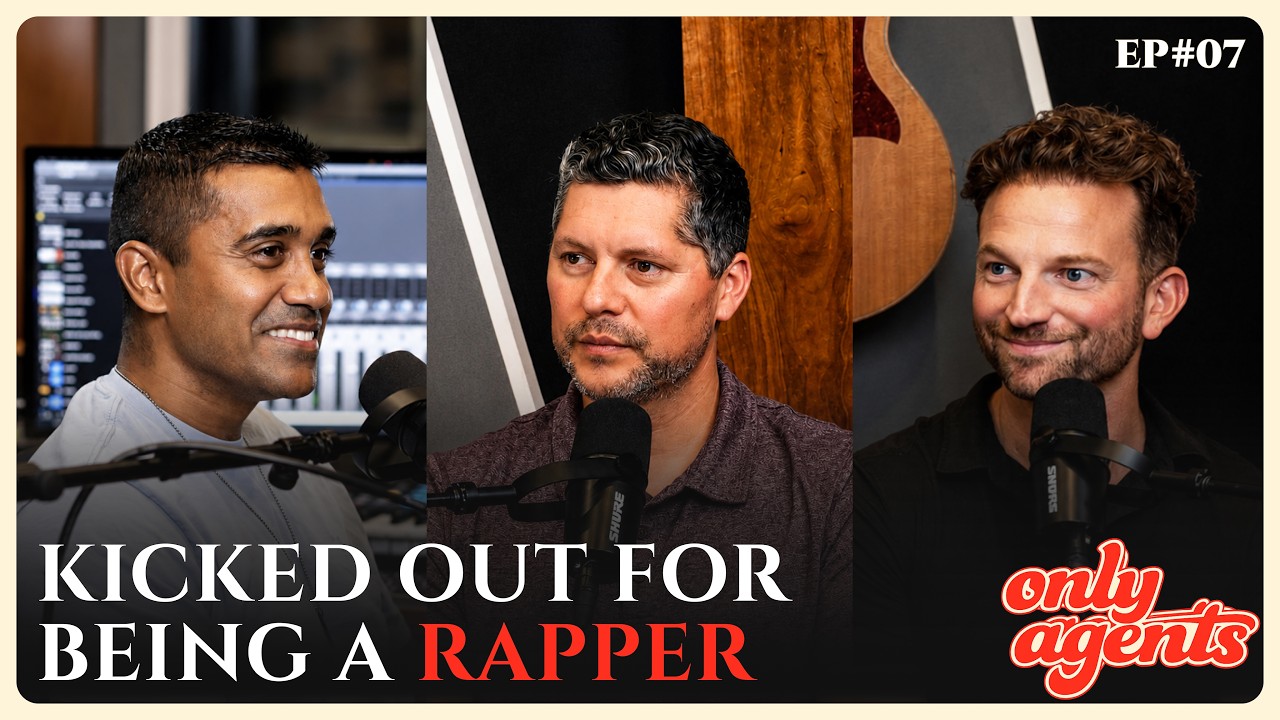
typical setup. Today we are lucky enough to be recording in the private music studio of one of our clients and now friends, Dilan, which is right here in his Beach Park home, which is also listed on the market by ASG.
So more on that later. The other reason is because Dilan is probably one of the most interesting, unique, and dynamic people that we've had the pleasure of getting to know through business. He is a real estate investor, a musician, an entrepreneur, a husband, a father, and most recently, a published author. Oh yeah, you forget. A while ago. He's Sri Lankan. He was raised in Los Angeles before making his way over to the Tampa Bay area. And he did all of this. And he also built an amazing career in commercial and multifamily real estate, all while writing and recording over 1,300 songs as a musician. He's now getting ready for a new chapter in Nashville to be closer to the music scene to raise soon to be four kids under the age of five.
And continue to grow both creatively and professionally. So today we're going to talk all things real estate, music, reinvention, family, discipline, health, wellness, Tampa, Nashville. And of course, what it's like working with your boys and the team here at ASG. Yeah. But first, before we get into it, Alan, who's today's sponsor? Today's sponsor is 4402 West Beach Park Drive. An expansive 7,800 square foot palace engineered to perfection. Seven bedrooms, so many bathrooms that you could hide out from your children four days without them being able to find you. It comes complete with a sauna and a gym, a four-car garage that can easily be converted to an eight-car garage, almost half an acre in the beautiful beach park area.
And for what price could it be yours, viewer? Just under $7 million. I truly, it is, well, first of all, Dilan, welcome to the podcast. Thank you. It's nice to be here. Yeah. But yeah, I meant it. I mean, you have to be, there's that commercial, the most interesting man in the world. And legitimately, since we've gotten to know you, that is what it feels like, because every single day, first of all, the conversations are amazing, fun, and they go in a ton of different directions when we're talking. But the things that you've done in your lifetime so far are insane. And that's what's really exciting to see what you're going to do in this next chapter in life, too. Thanks. But yeah, we'll get into all of that today.
I guess the first question is, who is Dilan Jay? If you were going to describe yourself to someone who just did not know you at all, how would you do it? I'm a musician, would be the first thing I'd say is that I'm a musician, because I think most of my heart and most of my thought process comes from creation first, right? It always comes from like making something, especially out of nothing, actually, because that's what we do, right? Like hear a song or something. My favorite musician is probably John Mayer, Michael Jackson. You have all these people that were Ed Sheeran. And these are like musicians, but when you think about them, they're just creators, like Ed Sheeran Paints, Michael Jackson helped the world many times over.
John Mayer has been on literally everybody's album, helping them make solos and make excellent songs. And also, he's been a really helpful teacher. I think John Mayer is like doing a lot of teaching on YouTube.
So I would say first, I'm a musician, but I'd say that kind of helps people to understand how to approach someone like me, right? Because the approach I find in life is always like the real estate was a funny time for me. The real estate I had to do because of my dad, you know, when you come from a South Asian family doing, man, it used to be just doctor. But like, your assistant just said like business or medicine. But that wasn't even an option when I was a kid. He's 17, I'm 47, 46, right?
So like back then it was like just doctor, not even lawyer, just doctor. So there was an education I had to seek out no matter what. And I remember when I was in college, and this is the reason why I even know real estate, honestly. Because I wouldn't even say that I would have ever been in real estate if it wasn't for my dad. Because I think that like we are, even though I don't think we agree or no, we are like a product of our parents. Like whatever the parents did do that we wanted to do or whatever the parents did do that we didn't want to do, we become like either starkly opposite from our parents, similar or some gray area where like you take what you like and then you throw away what you don't like.
But everything is still based off that one primary mom and dad. Would you say you're like a mix between? Well now I'm neither, but that took me a long time to bifurcate myself from the cultural indoctrination of my family, right? Like everybody is indoctrinated into the culture of their own family. You'd call it their family culture, right?
So in my family culture being a doctor was it. But I decided to study business because my dad had bought these two real estate buildings that he was losing money on. And when I was a freshman I was undecided and he called me and he's like, oh Dylan, you need to hide the Suburban. And I was like, why do I need to hide a car? He's like, well I find for bankruptcy.
So they thought my dad thought they were going to steal the car, like repo the car. So that's when I decided to study business. Did you, when this is happening and I know your dad came to you and then we can go into how you helped his real estate business. But back to music, you became quite well known in Sri Lanka. Sure.
Now was that before, during or after what you're talking about? It was after college. Okay. It was after college. So sometimes like when people need to find what they want to be and they're younger, right, 17, 18, 19, 20, they have to think to themselves like what did they do their whole lives that they didn't know they were doing because doing it didn't feel like a chore. That is the question you have to ask yourself as a kid. And one of the things I didn't realize I was doing since I was a kid, because I didn't see it as doing something I just saw it as life, was I was a DJ. I started DJing when I was 12 and I totally forgot about that when I went to college. And I kept DJing all through college and I never considered DJing part of my life because it was something I loved.
It was something I loved so much. It was already a part of who I was without me understanding that it was who I was. You know what I'm saying? Yeah. But it took me a long time to figure out that the DJing was it, music was it.
So even when I got to college, I never thought I was going to be a musician. Never, never even occurred to me. Well, back then you said, I mean, you talked about you didn't even sing until your 30s. Yeah. I didn't even sing until my 30s. I started rapping in my 20s. I barely started producing when I was 18 or 19, but I've been DJing since I was 12.
So like what happened was after my dad decided that to file bankruptcy and I decided to study business, I didn't think about music again. I studied business. And then I read Rich Dad Poor Dad in 1999 when I think it was kind of new. Yeah, definitely. And I realized like, oh, look, and then I then I did this thing, this discovery, right? Like everybody wants to be rich to some level, right? If it doesn't like, so it doesn't affect your life, right?
So money doesn't affect your life. So you need some level of money so that could be rich. That could be middle class, whatever it is, people need money. And everybody knows that, especially every man, right? Because the men hold up their families, right? And nowadays women do too, but not when I was growing up.
So you get married and the woman takes care of the kids and you have to have money. Anyway, the bottom line is when I did a little research on real estate and I looked up who are the 10 or 20 most wealthiest people in the world, like 85% of them were real estate owners.
And so after reading Rich Dad Poor Dad and then seeing that, I'm like, oh, so this is where all the rich people are at. That's what's up, this is what I'm going to do. There's beyond something. Yeah, they got to be on. And your dad was involved. Yeah. Well, at that time, I didn't even know, honestly, he owned real estate. I want to pay an attention. I was 17 years old. Yeah. I didn't know what he, what, I knew he was a doctor and he delivered babies. I knew he had a clinic. I didn't know he owned the real estate in that clinic. You know what I mean? Yeah.
So I studied real estate not because of my dad, but because I noticed that the most wealthiest people in the world were real estate, well, landowners and not real estate professionals like us. Yeah. Developers and brokers. They were like many, many hundreds of years, the kings of, sons of kings that own all of America. And the wealth was transitioned over time. And you know, it's like, if you think of Pasco County, I'm sure like one dude owned Pasco County, you know what I'm saying? Hernano County is like that too. There's like three families. Right. And before them, it was one guy. You know what I'm saying?
So it's like many generations of wealth is what created all those wealthy people on that list, right, of the top richest people. They weren't like some guy who came from nothing and bought a bunch of real estate. No. Some guy who had a bunch of real estate and passed it down, right? Back then it was the Waltons, right? The Waltons were like one of the richest people in the world. And they owned all their real estate, right? Well, they were Walmart. Yeah, the Walmart people, okay.
So your dad comes to you and he's like, I'm hide the Suburban. Well, he calls me because my dad never comes to me. My dad is very Sri Lankan that way. Okay. He'll never, I don't think he even came to my college even once, honestly. I don't think he's ever been to USC. Maybe for graduation. Oh. Yeah.
So my dad is, he's old school. If you see him, he looks like a mafia guy. He's got like high collars, always wearing full suits. It doesn't matter. It's all so old school, right? Is the relationship still like that with you guys? It's still very like old school, like that's the dynamic. But it's it. It's who he is. Yeah. It's like, you know, he's born in the 30s. He was born in 1937. Holy shit. I don't even know what they were doing back then.
So how, when your dad was asking help with real estate, like. That was later. So what happened was he filed for bankruptcy. I went to study real estate. I graduated from college in three years instead of two. I was running track there. I was doing my own life, right? I was hiding my car like he asked.
So it was very separate, right? I come home, get my laundry done and eat food like every other guy does, right? Yeah. And my mom and my dad would always say like when I'd come home, this is not a bloody hotel. You need a bloody hotel. Eat, shit, sleep and go. My dad would say the same thing when I would come from college. Yeah. That was the Cuban in him. He was born in Cuba. Yeah. Yeah. Similar.
Anyway, after I graduated, my dad was like, what are you going to do, right? And that's when I was pacing up and down my house going, what am I going to do? And I told him I want to help people because ultimately that's what I wanted to do. I said, listen, I want to help people. Would you get your degree in real estate finance? Okay, so it was that because of the book? Because of the book. Yeah, okay. I was following the money, baby. Yeah. I was trying to help my dad not file for bankruptcy, so I followed the money. Yep. And I studied. A lot of people, they don't like their college degree. Like a lot of people, they say like college reduces for them and Jen tells me this all the time. I might be one of the only people who loved college.
I love reading my books. I loved everything about finance. I loved all the trading books. I loved all the law books. That's why I graduated early because I was always studying. I was studying, partying or running track. Yeah, you seem like a voracious learner, reader. Yeah, I got to eat up the education, man. Education is minus what we were paying for more. Like it was just interesting because like in your own house, all you know is like what your parents teach you and most of what your parents teach you is not education. It's culture, right? Like in our culture, we do this. As Buddhists, we do that. We go into Sri Lanka because we need to pray. Like, you know, it's not like six times six equals 36 and that will get you $36 million if you invest in it.
That's not shit you learn. Anyway, bottom line is after I graduated college, my dad asked me what I want to do. I told him I want to help people. He convinced me I should be a doctor. Then I ended up in medical school. I never presumed that I'd be a lawyer because the law seems like you've gone too far. I always feel like if you've got into a lawsuit, like what can we just talk about? I never thought about pursuing that because I figured we just talk and sort it out.
Anyway, so I went to medical school, believe it or not. American International School of Medicine in Guyana, Georgetown, Guyana. Now I had to go to a bootleg school because I only studied real estate in college.
So I got into this bootleg school and my sister and my brother were both there already. So my little brother who's a year and a half younger than me had gone to like some pre-med schools and then ended up in Georgetown. And my older sister who's seven years older than me was like off her life, so she ended up there too.
So we all ended up in the same place at the same time. Parents' dream. Yeah, I know, my parents' real dream for one semester. In that semester is when I realized... So I'm Buddhist, but I had these dreams every night like God was calling me back to America. Like you're not meant to be here, go home. You're not meant to be here, go home. Being a Buddhist doesn't mean you don't believe in God. It's just a lot of people think that. But anyway, the bottom line is I kept getting this message in my mind that I had to go home.
So I knew I wasn't meant to be there. So I had to find a way to get home and I was just telling Britt and Tobin this story. So I had to tell my... Like my dad wouldn't let me come home. I was like, I want to come home. He's like, no, you bloody stay there, you stay. You cannot get a dick if you bloody stay.
So he's forcing me to go at this point. So I had to figure out a way out to get back to LA. I mean, yeah, LA. And so I got into a post-bacc program, post-bachelorette program at USC, same school I was going to before. Told my dad I want to do medicine for real instead of this bullshit medical school.
And so he got me a ticket back. I did one semester, went on a 10-day meditation retreat. Yeah. So I did that for 10 days, pure silence over New Year's. So 26 December, 27, 28, 29, 30, 31. Watching New Year's go by when you're 21 years old and you're used to partying and having a New Year's. I was crying that night. I was thinking to myself, what is wrong with me? Well, knowing you and your personality too and how your brain works, I mean, how many ideas... What were you thinking during those days? I was struggling. I was struggling because I didn't know what I wanted to be, do, have. I was struggling, man. Mentally, I'm fighting with this, and this is all the bifurcation of culture, right? Like growing up in a family that wants you to do something.
Loving your family so much that you want to acquiesce, but knowing it's not for you. There's a struggle there and it's pretty fierce when you have a fierce... A lot of people have struggled with that, yeah. Exactly. And on top of the fact that my dad was not in any ways light on us. He used to beat us until I stopped him from hitting me when I was 12. He's tough, right?
So it's not that I was scared of him. I just didn't know what really was the right thing to do because I knew I have anger from my father, but I love my father. I like medicine. There's nothing wrong with it. You know what I mean? There's like...
So I'm really confused. So I remember on New Year's thinking because I'm out in... So I live in L.A., but the place we went was outside of L.A., like two hours out. Like kind of like in the forest or in the desert. I remember crying that night thinking like, do you're a mess, you know? Everybody's parting. Like, you know, I felt it like all my friends, but I don't have a phone, right? Yeah. Like everything is gone. And I woke up the next morning and I kept meditating until the 4th of January. I'll never forget this because I finally came to a peace with it. Like in Buddhism, the concept is that all thought is connected to mass.
So when you feel heavy or when you feel depressed, you feel heavy. And when you feel happy, you feel light, right? So this is this concept and in Vipassana meditation, you focus on the body to feel those pieces of mass and they come fizzle up and disappear.
So you're letting go of mass basically, right? Over time. So finally, when I got home, I spent a couple days pacing the house in silence and then I finally told my dad and then I found that thing that I wanted to do that I realized I'd been doing that I didn't know I was doing, which was music.
So then I told my dad I wanted to do music. Oh, that one went well. That went very badly. And then he's coming back from attendee meditation. Yeah. Well, after, you know, what happened really, that really pissed him off is like, he had some justice. He's like, okay, well, that's education. I get to piano lessons, right?
So I'm getting piano lessons. Then I realized I want to be a rapper. So I told him I wanted to be a rapper maybe two weeks after I told him I wanted to be a musician, then I got kicked out of my house. And then it was just kind of like sorting out life from then.
So you get kicked out of the house. What takes place between that moment and then you becoming like a top 10 billboard artist in Sri Lanka? Oh yeah. So I was 22 when I was 21. And then I spent a year off, honestly. Just trying to be a DJ, trying to produce. My brother let me stay. He had a condo.
So he let me stay there ultimately. Yeah. And this is what happened. This is how real estate started. So I'm fighting with myself to learn the piano. This is a hard instrument. You know, like this is not an easy instrument and guitar. I didn't even think about it because I didn't, I didn't come from the class. Like when you're Asian, you learn the piano. You learn the guitar. When you're white, you learn the guitar. You know what I'm saying? Because John Mayer is like, you know, your guy. You know, us, it's this hard thing. I couldn't confront it, honestly.
So I ended up drinking a lot, smoking weed, which was like the only time I ever smoked weed because I ran track, right? So I never really put anything in my lungs. And I spent my life for like a whole year because I graduated early anyway, right? I was working at Whole Foods.
So this is, so here's a good, great story just for you guys to know. Whole Foods only had four stores. I walked into Whole Foods when I was 21 years old and I go, this is the future of grocery. I have to work here. And my dad was pissed because I had a finance degree and I was working at grocery store. He was so mad. He didn't want to tell any of his friends where I worked because I worked in the vitamin area of the grocery store, right? With a finance degree. But when I see something and I know it's the future, I have to be there.
So like Whole Foods, we all know what happened to Whole Foods now. But in 2001, no one could make that call. I did though and I had to work there. I was like, I have to work in this grocery store. I don't know why, but I got to work here.
So I was working at Whole Foods back when Whole Foods was not Whole Foods in 2001, living with my parents and then telling my dad I want to be a rapper. That was it, you know what I mean? That was it. He had it. He was like, I had it with you, loser. Got in my house. You're working at a grocery store, you motherfucker. Can't blame your dad. Yeah. I can't blame him. I mean, he did pay for my education. I went down a lot. You know, he's a good guy. He was just a tough guy and he could have been a better dad. From the old guard. Yeah, it's from the old school.
So once I got kicked out, I f***ed off another year and then I got hired to start making, producing music for a Latin guy in Mexico City. So I left. And in that year, I cleaned up my whole life because now I was away from all the problems. And that's like one of the biggest... That's one of the biggest things that changes a man or a woman is when you get them away from their environment. Yeah. Right?
So like people never leave their environment. They live, their parents live 10 minutes from them. And you know what I mean? And this is not a problem if there isn't a problem. But if there is a problem and you're at ends, you gotta leave. And I didn't. I went to USC. Right? Right.
So I was too close all the time. So finally when I got to Mexico City, I was able to see myself. Does it really find yourself in self-discovery? And go, oh, I don't even like to drink that much. All this bullshit parting is some other, it's not me really. It's masking other things. Yeah. It's masking all sorts of other shit.
So once I got to producing and helping him make hip hop music, obviously I learned Spanish. So obviously I speak Spanish now. And these are like the skills that I learned over time. I started to realize, oh, music is what I want to do. And I made my album in Mexico City, a hip hop album. Okay. Because I had the privacy of my own brain to create shit. And it made it easy for me to just make something without the anguish of always having to show it to someone and then someone saying, it should be this or should be that. Back then you're making an album. And then what's the distribution like? Because obviously now it's different. CD Baby.
So it was CDs, it was past tapes. Yeah. Well, it would just move from CDs to CD Baby. Okay. Which was a distributor. CD Baby was the first distributor of music. I thought he was saying CDs Baby. No. It was called CD Baby. But they sold their company for like a billion dollars. Right?
Anyway, it was the first distributor of digital music. It was like the first digital music platform that distributed for unknown artists. Oh, okay. So I finished that album in 2004. I released it in the Christmas of 2004. And I had a number one hit in like two months. Because what ended up happening was I went to Sri Lanka. Right?
Now keep in mind, I was freestyle battling people at USC. I would go to Crenshaw every Thursday night to this place called Project Blow, put a hoodie on so people don't know my race. It was like a mile Eminem stuff. Straight up and go freestyle battle people in the hood. Because I really just liked it, not knowing I'd ever be a rapper. It just never occurred to me. I just liked it.
So I spent every Thursday night, you know. Yeah. Yeah, you didn't realize you were like in training. That's a no work on it. Yeah, this album. Every Thursday night I go down to the hood and I battle. Yeah, because there's something like, you know, rap was so good back then. It was like such an incredible art. You just wanted to know like even how it burgeoned, right? That's a black art.
So you can't learn it from white people or Asian people. Got to learn from black people, right? From where it came, right? So anyway, so I did that all the time. So when I wrote my album, it was so easy because I was freestyle battling for years.
So like writing lyrics were simple because I can make them up literally off the top of my head. So if I got the chance to like even wait one second to write it down, it became very simple. So I wrote a lot of fucking songs. That's why I have so many songs. Oh yeah. It's because I was freestyle battling for three years of my life before I even decided to write actually a song.
So like early on, it's like you obviously, your passion with music, especially now, it's kind of taken the forefront. But you know, back then you're kind of dabbling in the music, you're dabbling in real estate. Not yet. Real estate still hasn't hit me. Still hasn't hit me.
So then I came back from Mexico City in 2005. Okay. I had an album. The song was blowing up and my dad was still in the same financial problem. And then he's like DeLon. So he asked me to help him. He's like, DeLon, we really need your help. The manager quit. He had these clinics, right? He delivers babies. And he delivers babies in the hood, like, but in the Latin hood in LA, which is called MacArthur Park. And all of the areas, Echo Park and all those.
Anyway, the bottom line is, is he's like, I really need your help. I bought these buildings. It's a mid-rise building. It's a 10 story and 14 story building on Wilshire Boulevard, but in the hood. I don't know what to do with them. I'm losing money on them. And I don't know what to do.
So at this point, I was like, well, I paused my career literally and then I went to go work for them. Oh, wow. So you press pause to go help the family in the real estate business while basically blowing up at the same time. Your career as a rap artist is blowing up. Yeah.
So I paused it because I didn't spend 100% on it. I split myself in two, which is basically what I've done for the rest of my life. I feel like that's a common theme that has followed you pretty much until now where now you're trying to move around. Yeah.
So I split myself in two because obviously at that point, since I'd separated from my dad for so long, I realized like, oh, I'm not really mad. Let me help this guy. You know what I mean? It wasn't, I wasn't spiteful of him. I just didn't want to be around.
So anyway, I got an agreement from him as long as my stats go up, just stay out of my way because we were really butt heads. We're both alphas, super alphas, right? So they did. And you know, I killed his $40,000 deficit in three months and he had it for almost seven years. Okay.
So he was delivering babies to make up for $40,000 worth of loss a month. He delivered 13,000 babies in his career. And that's a lot of babies. A lot of babies. He had a $787,000 payable that he couldn't get rid of. I finished that, paying that off in eight months. And I became a very shrewd businessman. How are you able to, I know outside of just your education and reading the books and of course your major in college, I mean, you step into this mess. Yeah. And how are you able to, I mean, what mistakes did you make? What things did you do that were just maybe intuitive? Yeah. Like talk us through that. Sure. I read. First thing I did was I read all the leases because I was, once again, I'm very curious about what does the data say.
So in the lease, you can see how people are getting bent over backwards or how like the actual leasee, right? Or Liseur is missing his chance for money, right? You only learn that once you start negotiating. And this is kind of like where I became a very good negotiator because in MacArthur Park, you'll get a Persian guy, you get a black guy, you get a white guy, you'll get every race to negotiate with. It's C grade building, right?
So you get like guys who would have a home, like now home office is normal. Back then, you couldn't say in 2005, I have a home office and I'm a lawyer or I have a home office and I'm in film. You can't say that shit. They'd be like, dude, this guy's a artist. He doesn't even have an office. That's the era we were in, right?
So a lot of what I was selling people at that time was like, hey man, you need to look professional. You need an office. You need to look professional. You need an office. So I'm selling these about this big, you know, like 400 to 700 square foot spaces and I'm breaking down walls and building them back up. And because we didn't have a lot of people, I was breaking down walls and building them back up with my staff, right? And we didn't have a lot of staff.
So I guess what ended up happening was I read first, I started trying to negotiate. I failed and I failed and I failed. And I didn't know why I was failing until I realized negotiation has to do with culture. The culture you're from dictates how you negotiate. Like Indians and Sri Lankans, we always need a discount. I do not get a bloody discount, I will not buy. Right? Yes. Right? Like for instance, I did a lot of work with Koreans because Koreatown was like next to us. Koreans minus like they don't necessarily need a discount. What they wanted was value.
So if I had a room like this, if I told them I'll paint it for you and give you a carpet, they feel taken care of. And then they're like, okay, I'll pay the money. Right? Because I remember the first guy I got was $185 per square foot. And out there like the cost per square foot was like 99 cents. But I was so naive and I thought I can get it.
So I just went like an idiot to sell it. And I sold it to a Korean and my first guy that I sold. And he was happy with the price because it's so small, right? Because really when you're dealing with per square foot, people don't understand that. They're like, do I pay $500 for this or $400? For me, if you pay $500, it's $185. If you pay $400, it's 99 cents.
So to get an extra $100 just for putting a carpet in raises all the prices of my rent. Oh yeah. So anyway, the bottom line is I started to learn about how all of this became important. Then obviously if you have almost a million dollars worth of payables, what do you have to do? You got to communicate with your lenders like DWP. You got to set up payment plans. You got to ask them for a discount. Say, hey, I'll pay you all of it off if I can get 30% off. You start to learn that creditors really just want their money back. Right before the great financial crisis. Thankfully, this wasn't like that going into 0.708 or your dad would have been. Tanked. But he's lucky I was there because I'll tell you what happened.
In three years, I filled up the buildings. They were 30% occupied. Each one is 100,000 square feet. Take this house times it by 10. That's each building. Okay. So that means you put 10 floors on this house. That's what I was running out. Right.
So what happened was in 2005, 2006, I filled up pretty much the buildings. The level of attrition, meaning like every year you have to rent out was 30%. So if it's 100,000, I had to run out 30,000 square feet every year just to keep us at status. Right.
Now it's two buildings, so 60,000 square feet. When it got to seven and eight, I had to run out the attrition was 50%. So I had to rent out 100,000 square feet every year just to keep us at status quo. And I did.
So he never even felt the recession. Damn. Wow. Because I was running out of spaces like crazy and renovating them. So really cut my teeth in real estate there. That's really the story. And then for the next, I guess 10 years before you ended up coming to Tampa, I mean, you came to Tampa when 2000s? During the pandemic, 2020. You were, I mean, music took a side step and then you were basically real estate. And you did a bunch of different projects. Yeah.
So you're expanding the portfolio? Well, I teetered back and forth. I had multiple number one hits in Sri Lanka. I probably have over 20 number one hits. So I'd go there and I'd do concerts and then I'd come back. And ultimately when I was 32 years old, so I worked for my dad for seven years, I cashed him out $7 million during that time, two times 3.5. And I increased the value of his buildings by $20 million.
So I doubled the value. Was he finally happy that you didn't go into that? He was happy with me after the first three months. He never, there was nobody who could touch me after the first three months. My dad left me alone. I gave him so much money all the time. He loved me. He still loves me, but we didn't have a contention. I could do whatever I want. I could go to the studio if I wanted to. And my 20s, a lot of people don't understand this. A lot of people don't know the hustle in your 20s dictates your 30s and your 40s. I didn't even see my 20s from what I remember. I woke up at six. Was that work by 730? Because I have to get there before everybody else, right? Because everybody gets there at eight.
I leave at six or seven because I have to leave after everybody else. So they know that I'm not around. Then I ended up in the gym, then in the studio, right? Like I had built out a little studio in the office space that my dad let me do, right?
So I got an advantage there. And I would be there until 12 or one, right? Until my brain was like absolute mush. And then I'd do it again. And I'd do that for seven years of my life. And I don't remember it. But I know I got a lot of skills from it. I don't fucking remember it. You know what I mean? Because I was working all the time. I drank here and there. I loved to party, but it was never like something that like you served my work, right?
Anyway, after that, I quit working for my dad because the buildings were full and I'm bored. Yeah, you're always wanting to be accomplished there. Yeah, I did what I needed to do. I left there and then I...
So I'm married now, but I was married before. When I decided to get married, I realized like I got to take the serious. I couldn't get music to blow in America because that's where I was like moving to.
So then I started my real estate fund and I raised $17 million. And then we've been running that fund for 10 years. And that's basically how I've been in real estate for so long. It's a love-hate relationship. Oh my God, it's so much. What then brought you to Tampa?
So you got married and then you got divorced? Yeah, got married, got divorced. Met Jen, my wife now. Before moving to Tampa. Before, yeah. I came here in 2018 to get the divorce. So I left LA so there was no drama. I didn't want any drama with my family.
So you fled to Tampa? I fled. No, I fled to Clearwater. I was living in Clearwater in 2018. Then I met Jen, got a divorce, and then Jen and I, because I had a movie coming out. So I was always concurrently working on film and music.
So I had this movie coming out. It was the lead actor in the film. It was coming out in whatever, 15 movie theaters, not that many, but LA was one of them. And I lived in LA. So I was like, let's move back to LA. Let's get this career going. And Jen's like, let's go.
So we bought a house in LA in 2019. Get there. The movie's supposed to come out March of 2020. Perfect timing. Oh boy. Yeah. You can't make that up. So you can't make this. I mean. Okay. And my birthday is March 14th. Okay.
So the pandemic hit on March 14th. I had 32 shows booked as a musician, like in all the areas in LA. You know what I mean? The Viper Room, like every room, right? And I had a movie coming out. And I'm like, this is it, baby, 2020. I finally get to cross over. And the pandemic hit and ruined my movie. Movie's still on prime. And you know, you could buy it on Apple TV, whatever. Ruined my music career again. Yep. Right? And then I was back to dolo, you know, like trying to figure out what to do.
So then Jen and I were like, let's go back to where we fell in love because we heard it's open in Florida, right? Because, and I felt like they're riding on a wall with the vaccine cards and shit. And I wasn't going to get ready to do none of that, right? And Jen and I wanted to have kids, obviously, you know, at that point, 30, 20, 20, I'm 40 years old, right? And I'm not kids yet. I thought I would have kids with my first wife and that didn't work out.
So anyway, so we came back here, dude. And then we were in Clearwater because that's where we were. And then I was like, yo, Clearwater too low. Let me go check out like another place. Bays were beautiful, South Tampa. Yeah.
So then I drove over here to Tampa and I was like, I love it. Jen, this is amazing because I went back to Teller, right? Because I'm going by myself. I'm like the discovery guy. So I go and discover it. I'm like, Jen, you have to come to Tampa. It's really awesome. We should live in Tampa. And then, you know, we moved over to right where Soho is. Okay.
So did you rent first? Yeah. We rented a condo right there behind the gas station. Yeah. In the gas station. And there's like a restaurant right next to the gas station on Howard. Kind of like between Soho and New Summer. It's on Morrison and Howard. Beautiful. Yeah. Yeah.
So and then I got to kind of understand like the vibe of the. The water and flower. Yeah. Yeah, water and flower. It might have been Chichi at the time. No, it was water and flower. That's probably why, yeah. Yeah. Yeah. But I got to understand the vibe and so much great college vibe. And you know, I love to party and I'm a DJ and I love music.
So I was like, I'll just say at that time you were married, but you're back in Seattle. You were still kind of. Yeah, no kids, right? No kid. When you don't have kids like, you got time dog. When you have kids, you only got no time. No time. Yeah. We got to lock doors out here to get some time. Okay. Yeah. Shut people off. Spend hundreds of thousands of dollars just soundproofing a room. Could be yours to the next buyer. Exactly.
So much time. So much. We will give you time. So long. That's what Beach Park gets you. It gets you the gift of time. Beach Park gives you the gift of time. So you rented and then you started looking to buy a home. That's when I bought all the real estate I own now. Yeah. I bought Palmetto, right? Right. Yeah, because real estate, your real estate mind can't stop.
So you start looking at deals here. Exactly. So I'm looking at deals. I'm finding land and I'm going, let me buy that. I bought that for a million. I bought the other one for $350. So talk about those two real quick. Where are they at and where are we at with those?
So Palmetto, you guys know Palmetto Bay, south of Ikea, right? So 2021 I bought a piece of land there thinking, oh man, this is going to be the future of Tampa, Palmetto. Because Bayshore Beautiful is done, right? I've been saying the same thing about Palmetto Bay. Yeah. And I'm like, I'm going to buy land here.
So I bought a big ass piece of land. I entitled it for 78 units. Now we're going to re-entitlement for 130 units. So we're taking it up even higher. And this was before Darryl Shaw bought all of the Ebor Bay. Yeah. All of it, right? Yeah, he bought all of it.
So yeah, I'll take that and no, no, no, all of that. Ebor, please. Yeah, I'll take Ebor and let me get a side of Hillsborough County. I'll get some of Pasco. Anyway, so I bought that and then I bought something in Pasco County because Pasco is blowing up.
And so it's next to the hospital up there, next to Trinity. Three acres of land. I got that entitled for 90 units. And I was like, oh, good. I have money. I have land. I'll build these. I'll build a family. I bought this land and was like, okay, let's build six bedrooms because I want four kids and us and then place for our in-laws to stay and seven bedrooms actually. And then I'll always think about, because I'm Sri Lankan, having a maid or something to help. Then I'll build my studio and did all this. And now we're sitting right here and we finally reached that point where it's like, okay, I want to build these, but now I want to actually work on my career. But actually the truth is, we want to move to Tennessee because we need more land.
We need five acres for the boys. One of the things I realized about having boys is they have to be outside. So you can't, as big as your house may be, which is a very big house, they still need to be outside. And this backyard in reference to a five-acre property ain't shit.
So I just want more land. It's a different lifestyle. Yeah, it's a lot. I want to slow it down. I don't want my boys to be dependent on the idea that what they have actually makes them important. So I'm backing up this big-ass mansion to a little smaller house, actually, as I've gone up and I'm coming back down because it's important for the kids to learn the importance of humility, the importance of being able to do work themselves, the importance of not being on screens, because we're in an era where, if you don't actually make a concerted effort to change that, it just is. Yep, it's so easy to happen.
So easy to happen. For anybody, even now, they want to see how we make magnet tiles on Instagram. Like, oh, don't you have that video thing that could show us how, you know what I mean? So it's really hard to get them away from it.
So I'm making a concerted effort for my kids because that's what I want. I want my kids to be happy. That's my goal now is to make sure my kids are happy and to continue making music and releasing music and have the fame that I think allows me to feel acknowledged as a musician. And that's it. Yeah.
So you talked about slowing down and then the kids, obviously. Is that when you had kids and started the family? Is that when you kind of slowed down personally on the party side, too, to really focus on family and music? I stopped drinking before my second child. I haven't been drinking for four years now. I realized that that was enough. A lot of things that I'm doing today have to do with how I want my kids to see me. My dad was pretty much an alcoholic. I love drinking. I don't have a problem with people who drink. But what I noticed as a kid is the kids who never drank, their parents didn't drink. They just had no, like, punch on to drink at all. Even if, like, you want to drink. They're like, nah, I'm like, how?
How do you not want to drink? Doesn't make any sense. It's like, well, my parents don't drink. You're like, oh. Yeah, didn't see it at home. Didn't see it at home. Wasn't like a thing. So I erased it. My wife didn't really drink anyway.
So by the time Damon was born, I stopped drinking. So like, I've slowly taken things out of my life for the sake of my kids. And maybe one day they'll know that, but it doesn't matter. It's not for them to know that I did it. It's for them to have a better life. Yeah, right.
So it doesn't bother me. Well, one of the things that you added to your life about a year ago was Stefan and me. Oh, yeah. It was G. Yeah. So I noticed a year ago. So your old house was behind my current house. Yeah. And they were beautiful. I remember we were building out our Instagram page and you friended us. And I just remember your name. And then I looked on your Instagram and I'm like, oh, yeah, I had walked through this guy's house. It was on the market the year before.
And so I reached out to you and just kind of introduced myself. And then we kind of just started going back and forth. And then I don't know, do you want to talk about? I do want to talk about this. You know, I've met a lot of brokers here, probably six or seven home brokers. And I think when it comes to home brokerage, communication is key. Communication and class and manners. And that's really hard to find. And the ability to do the job, let's be honest. To have those confluence of events in one group is very difficult. And I found that in these boys. It was an accident. You know, it was Instagram. I added him. We became friends. He was really nice. I'd tried a bunch of other people. And I was like, why don't you guys try to sell this house?
And it's been actually really just easy. It's easy conversations. We always think on the same page. And they saw basically they saw my last. So the best way to know if someone's good is if you'll allow them to sell your next house.
So they saw my last house. Now, we didn't get a good price for it, but it's not their fault. It's just the economy. What can you do? Yeah. You know what I mean? This is where we're living. Like as a real estate person, I would be a fool to think it was their fault. You get what I'm saying?
So basically I was like, I love the way. And I didn't even know if you guys sold expensive houses. And to be honest with you, I don't even care. That's how much I trusted you guys. I just didn't care. I was like, I like working with Alan. I like working with Stefan. I like that their wives are part of their business. I like that they're around all the time. I like that type of ethics, right? Because like I told you guys, I can't take investors who cheat on their wives. Once I know it'll never happen. Oh yeah. You know what I mean? Because I'm not that type of guy. And I just not going to allow it in my environment.
So like I've been watching, right? You watch people, right? People don't know that I'm watching. I need to check my house for bugs. It's like a homeland. Yeah. I'm always watching how people treat their significant others. You guys look like husband and wife, right? Yeah. See, I already knew that. Good thing that they're husband and wife and they don't have their own husbands and wives. And they don't know. Well, the bottom line is, is this type of environment where you can put your wife into your business means that you and your wife are best friends. And that's the type of wife or husband that I think anybody would ultimately want.
Anyway, yeah, I think it's the dream. So anyway, so seeing all of the ethics we're in, clearly the manners are in, very, very nice guys. I was like, I don't actually give it if you had. I never even researched it, to be honest with you. If you had sold houses this big, I was like, I want these guys because I know they'll work hard. I know they'll be nice to me. And I know whatever happens, we can figure it out together. And that's, I think that's the crux of any relation, like any relation, professional or not, you know.
So it's like to me, whether you had done it or not, I had really no bearing on my decision. Well said, DeLon. Plus we're all born and raised in Tampa, our network's great here. Yeah, that's true too. And we're hard workers, all of us. Yeah.
So it's been really, I mean, I really love it. I mean, you know, it's been good, ASG. And what's funny is you guys call this only brokers, like only fans. Only agents, yeah. Only agents, kind of like only fans, but like a cleaner version. For $4.99 a month, you can see behind the scenes. That's awesome. But yeah, I mean, that's been my experience. And I appreciate it. I think also like making content and watching your content and seeing that you are trying, right? It's a hard time right now in real estate. Yeah, the market is tough. It's like one of those things that you hear so often, you want to punch somebody in the face when you hear it, but it's just true. Yeah, right. It's just like one of those things that are true.
Yeah, you don't want to use it as an excuse, it's just a reality. Yeah, it's a reality. So the fact that you keep pushing, and this is, this is, you know, something for you, Stefan and Alan, from my perspective, is the fact that you keep pushing always is, I know you guys are always going to be successful. It's like so easy to tell when you, it's easy to tell when someone's going to be successful, because they don't let the outside world affect their inside decisions, right? That's never works. If the outside world's doing bad, and now someone goes, Oh, well, I should be out of real estate and into tech, because that's what's doing good. And then tech goes bad. They go, I should be out of tech and now into AI.
Those type of people, they don't have a firm understanding of what it is to just stick on a path. Yeah. You know what I mean? Yeah, real estate's doing bad. Am I eating too? Yeah. You know what I mean? But who gives? This is what we do. Right.
So we will walk through it, and we will make it successful. You know, it's the same thing with music. I've been doing it for 25 years. Yeah. Should I quit? No, that's what I do. Yep. You can eat it. I ain't never going to stop. That will be bleep out. Yeah. That will, yeah. You can beep a beep, a mother beep. He's going to say, we're going to eat it, and then we'll put in sandwich. 36 minutes of the episode will be bleep, bleep, bleep, bleep. But you just can't, you can't ever stop doing what you believe in. That's the bottom line. Even if you have to swear, you know, swerve off it for a minute, doesn't mean that it's over, right? Like I still have, I have three songs on the radio in Sri Lanka right now, on charting, like top 10 songs.
Three of my songs right now. So it's like, who gives? I think like people take this age thing too far. They're like, oh, at this time I should get married. At this time I need to be married. At this time I should have that. Just do what you want to do, and keep doing it, and don't get distracted by everybody else. I think that's what you've mastered. You are so laser focused on the things that you know that are important to you. In a world where distractions kind of, you serve everyone's time, and you know, like the screen time, it's like you can look, and it's like you spent six and a half hours on your phone. Yeah, I know, it's crazy. It's like, how? Yeah. And that's not counting TV, iPad, this, you know.
Yeah. And I think another thing I just want to mention before we kind of close off here, is I think for a man kind, it's better to put value on who you are, and not what you have. There's so much of that. I see prevalent in Tampa, as well as in Los Angeles. I see too much Botox. I see too much peptide using, and steroids using, and I see people changing their faces, and doing all sorts of stuff, because I'm not sure if you're checking on the inside, really check on the inside. I don't have a problem with any of it, as long as it's something you're doing, not because of someone else. That's all. Yeah. You know what I'm saying? If you want to take peptides, fine. I've taken them too. If you want to do plastic surgery, fine.
Do it because it's- The right reasons. Yeah. For a reason that's internal to you, not like I need other people to make sure that I look young or I look better. Call that because that is going to lead you down a bad path that's never going to be successful. And I know that may be controversial, but hey, maybe I'm just controversial. Maybe you are.
So usually we end with rapid fire questions, but we wanted to do a new segment, which was investor or artist. So is this something that an investor would say, or something an artist would say? Okay, let's hear it.
All right, the money is in the back end. Holy investor. Okay. Okay. The first version was trash, but the final product worked. Artist. Do you want to- You need, yeah. You need the right partners. The whole thing dies. Oh, investors. All right. Yeah. It's all about distribution. As is musicians. I had to walk away because the energy was off. Musicians for sure. That could be, that could be, yeah. Well, yeah, not investors. That's residential buyers and then musicians probably. Yeah, residential buyers and musicians. I knew it was special when nobody understood it at first. Musicians. Or you have- Partners in life. You have to know when to stop adding things. That's definitely investors. It could be both, but I would say investors, they always want more and more and more.
And it's like, bro, just relax. This is where it is. This is actually going to make you money. All right, so if you want to end with the final question. You go ahead and end with the final question. I was going to say we could sit here. I could probably talk to you for another five hours.
So it's hard to like wrap it, but yeah, do you want to end with the final question? Yeah. When people look back at this chapter of your life, DeLon, Tampa, this house, your family that's growing, moving to Tennessee, the music push, what do you hope that this season in your life represents? I hope that I brought light to other people. My goal has always been to help other people in some way, shape or form, either by conversation, by business, or by music. And I hope that the people that are here that have met me, when I leave go, oh man, that was awesome that that guy lived here. We had a great time with him and I left a good kind of like imprints on the people that I met here and that's it.
I always believe that you should leave a place better than how you got it. If you get a car borrowed, then you should wash it and give it back. So you're always giving more than you're getting. And so that's what I hope people feel about me. When I leave. I got to tell you, well, thank you, of course, for joining us on the podcast today. But I got to tell you, if nothing else, one of the best things that we've been able to get through doing business is meeting people. But like I said at the beginning, getting to meet you, I would have been so sad if you left to Nashville before having the opportunity to get to know you, to work with you. Because to me, I feel like we have made truly a friend through working with you.
Thanks. And we'll be talking and doing business and talking about life long after you leave. Yeah, I hope so. I believe so. You've brought light to ASG and at least to my life. That's awesome. I can confirm that. Always a pleasure to learn. Thanks, guys, for joining. Thanks, boys. All right. Thank you again.